AI coding tools are exposing a management mistake more than a machine miracle. Teams celebrate how quickly a model can draft a function, scaffold a service, or autocomplete boilerplate, then act surprised when review queues lengthen and defects still escape. The paradox is simple: generative AI reduces the cost of producing code, but it does not reduce the cost of proving that the code deserves to run in production.
That distinction matters because many AI success stories measure speed at the moment of generation, not the full cost of verification and rework. GitHub’s own early Copilot study found that developers completed a controlled coding task faster with the tool’s help, which is useful evidence that AI can accelerate first drafts. But the same organisations adopting AI at scale still have to review architecture, validate business logic, test edge cases, and absorb maintenance overhead after the draft lands in the repository. Faster typing is not the same thing as trustworthy delivery.
The velocity trap
The strongest pro-AI argument is also the easiest one to misuse. GitHub reported that developers in a controlled experiment completed a JavaScript task faster with Copilot, and large survey cohorts said the tool helped them stay in flow and reduce repetitive effort. Those gains are real. They also describe only one slice of the software lifecycle.
The operational question is not whether AI can make an engineer faster at producing an initial change. It can. The harder question is what happens next: how much extra review, correction, retesting, and monitoring is needed after that change enters a real system. Teams that optimise only for draft speed risk mistaking local efficiency for end-to-end productivity.
This is where the paradox starts to bite. AI can improve developer throughput at the keyboard while simultaneously increasing the amount of downstream validation work required from reviewers, testers, and maintainers. The output arrives sooner, but confidence arrives later.
The validation bottleneck
Testing AI-generated code is not exotic because the syntax is unfamiliar. It is difficult because the code can look superficially plausible while missing the deeper constraints that matter in production: boundary conditions, data assumptions, failure handling, observability, and secure defaults. A function that compiles cleanly may still encode the wrong business rule or ignore the dangerous input that only appears in production traffic.
That is why AI-assisted development raises the value of disciplined review instead of eliminating it. NIST’s Secure Software Development Framework explicitly treats secure, well-governed software delivery as a lifecycle problem: define requirements, review changes, verify releases, and respond to residual vulnerabilities. Those are precisely the controls teams need when a model can generate more code than a human reviewer can comfortably absorb at a glance.
In practice, that means stronger expectations for tests around generated changes:
- Require reviewers to validate intent, not just style.
- Increase emphasis on integration, property, and regression tests where business logic can drift silently.
- Treat provenance and change-risk tracking as part of the release decision, not optional paperwork.
Without those controls, AI does not remove the testing burden. It redistributes it downstream, where mistakes are more expensive.
The maintenance bill
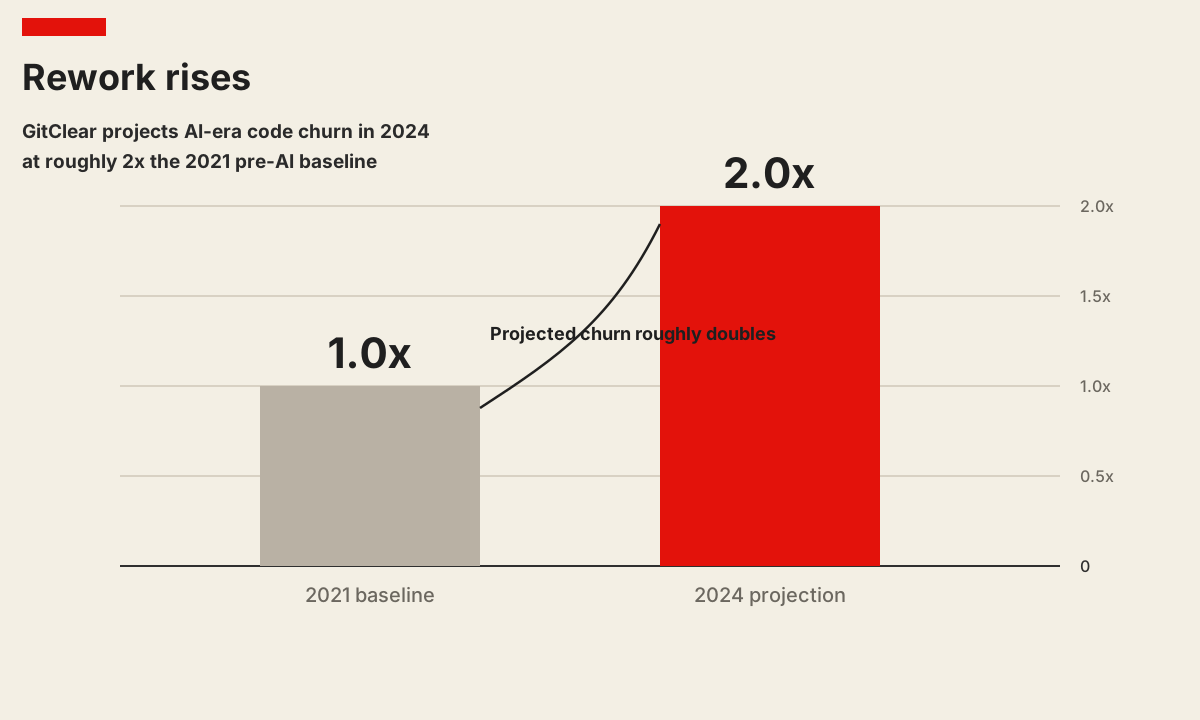
The best public warning sign so far comes from GitClear’s analysis of roughly 153 million changed lines of code. Its 2024 report argues that code churn is on pace to double relative to a 2021 pre-AI baseline, while copy-pasted additions rise and refactoring activity weakens. That combination matters because maintainability rarely fails all at once. It erodes when teams add more code than they reshape, review, or simplify.
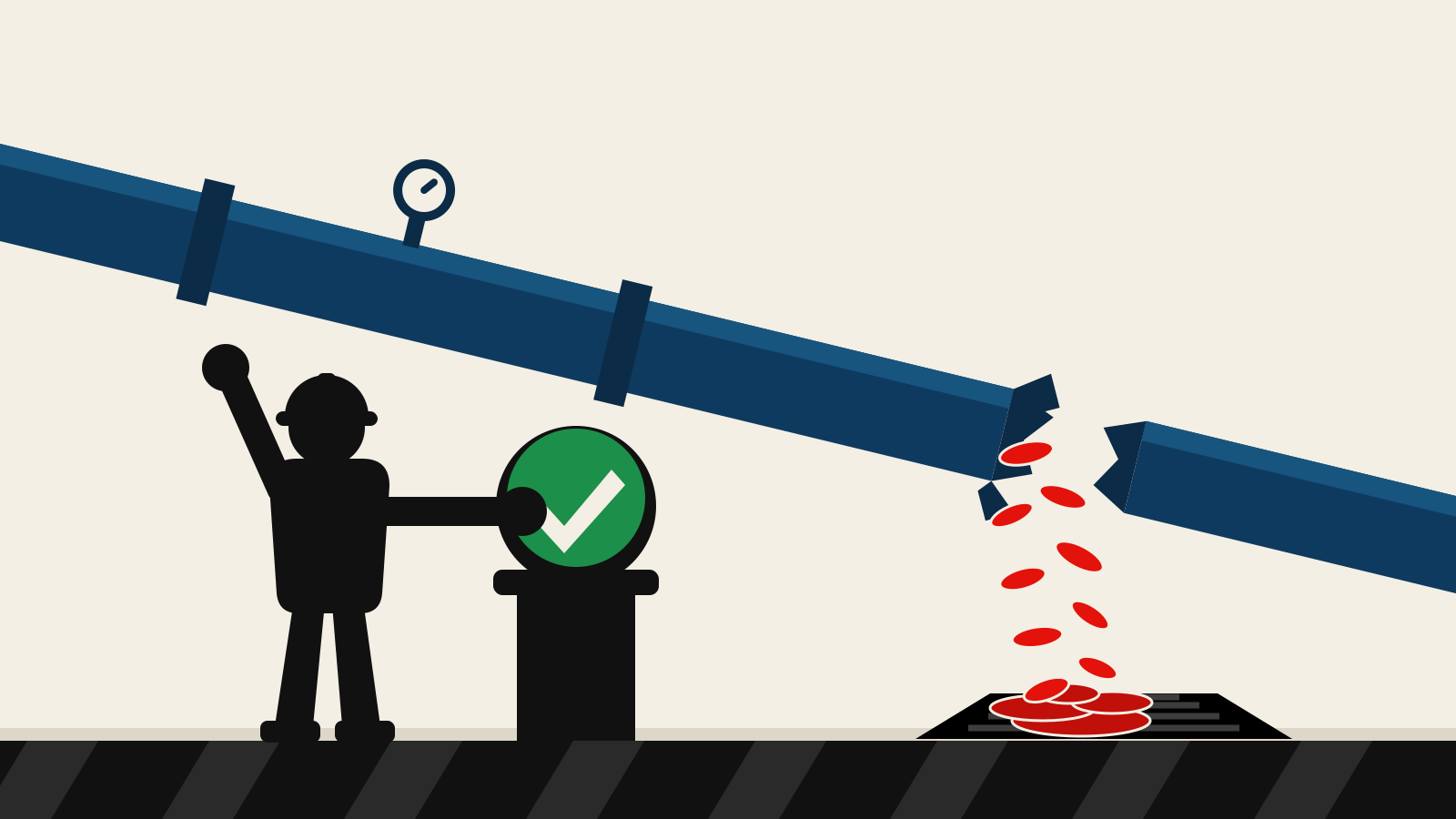
That maintenance bill is what many AI ROI stories leave out. A model can produce a usable draft in seconds, but a brittle draft still becomes someone else’s debugging session, rollback, or cleanup project later. As explored in The coder’s crutch: AI-assisted development’s hidden costs, the real organisational risk is not that AI writes nothing of value. It is that leaders start measuring generation volume while underinvesting in the systems that keep generated code legible and safe.
The same pattern shows up in testing strategy. If quality work remains a final-stage inspection exercise, more generated code simply means more material arriving at the gate. If teams instead treat quality as a system property — the distinction at the heart of QA, QC and quality engineering — then AI becomes another input that must be governed through design, review, instrumentation, and feedback loops.
What good teams do instead
The practical response is not to ban AI coding tools or pretend the productivity gains are imaginary. It is to tighten the surrounding system so faster drafts do not become slower recovery:
- Use AI to accelerate low-risk drafting, scaffolding, and repetitive work rather than to bypass design.
- Make generated code earn trust through review depth, test coverage, and production observability.
- Track rework, rollback, and churn alongside speed metrics so AI’s hidden costs stay visible.
- Keep release governance outcome-focused: if confidence is weak, the change is not ready no matter how quickly it was produced.
The long-term winners will not be the teams that generate the most code. They will be the teams that build the most reliable system around generated code.

Discussion