Seventy percent of digital transformations fail to achieve their intended goals, according to McKinsey & Company. This stark statistic highlights the pervasive challenge businesses face as they navigate the complexities of digital transformation. With companies spending an average of 10% of revenue annually on these initiatives, the stakes are high. The main culprits behind these failures often include lack of executive buy-in and an overemphasis on technology at the expense of integrating people and process changes effectively.
The Burden of Expectations
One of the striking revelations in the ongoing saga of digital transformations is that only 16% of executives believe their efforts have significantly improved performance with long-term sustainability. This gap between expectation and reality undersells the potential benefits of such transformations. The lofty ambitions of digital overhauls often give way to disappointment due to poor strategic alignment and inadequate change management frameworks. Many leaders mistakenly equate digital transformation with mere technology upgrades, neglecting essential organisational changes needed to bolster adaptability and resilience.
The Customer Experience Edge
A silver lining emerges for those prioritising customer experience in their digital transformation efforts. Digital transformations that emphasise enhancing the customer journey are 2.5 times more successful than those that do not, according to a BCG report. This focus on customer experience challenges the conventional wisdom that technology and infrastructure upgrades are primary drivers of success. By centering around customer needs, businesses not only achieve higher transformation success rates but also foster loyalty and engagement, which are critical components of revenue growth and competitive advantage.
The Cost of Delays
Despite the critical focus on rapid results, more than 75% of leaders report that digital transformation initiatives extend beyond expected timelines. These delays play a significant role in eroding the projected return on investment (ROI). As transformation projects drag on, businesses face mounting costs, waning stakeholder enthusiasm, and missed market opportunities. The lack of agility and iterative processes frequently bogs down projects, failing to adapt quickly to emerging challenges or pivot towards more effective strategies.
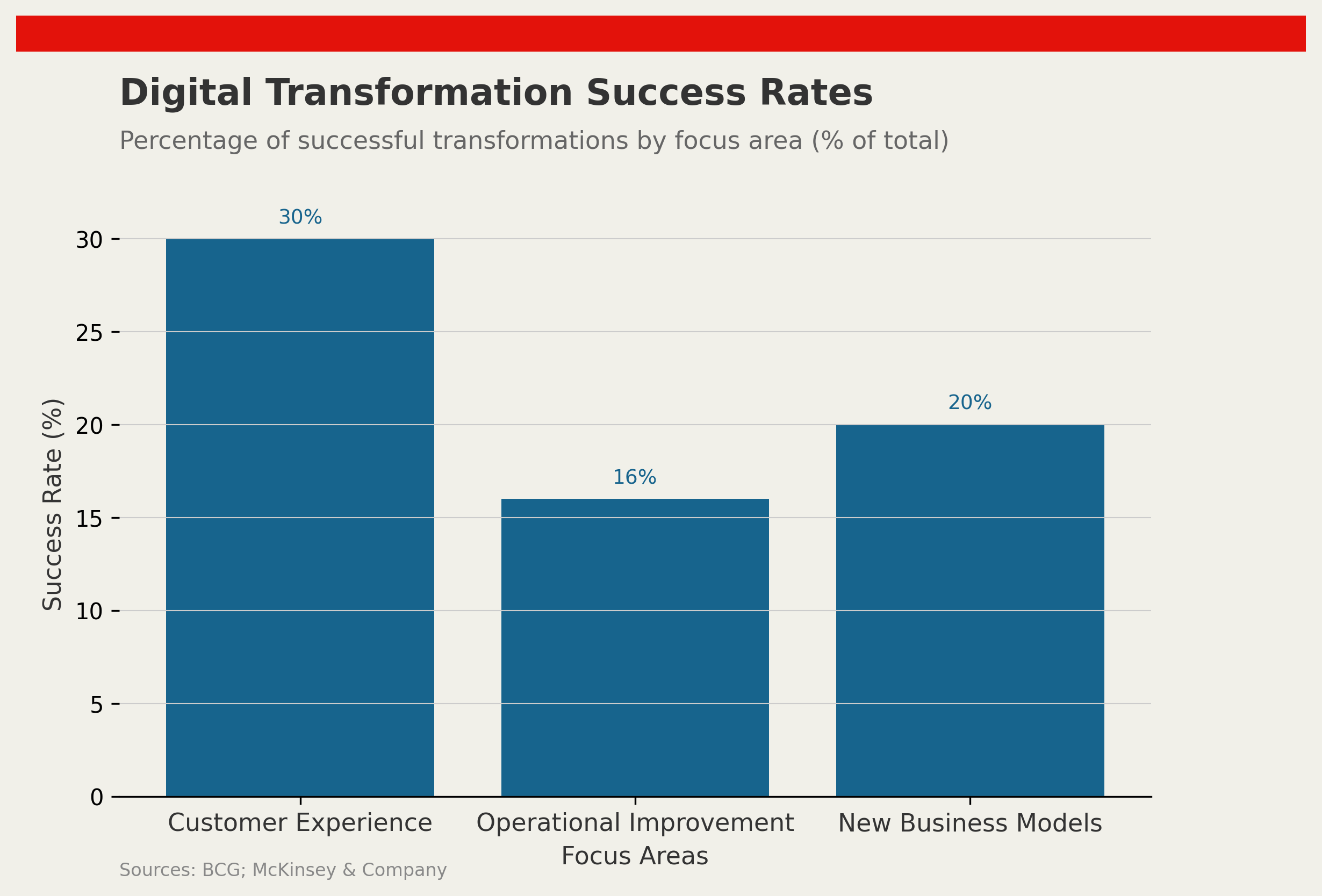
As the chart shows, customer experience-focused transformations boast the highest success rate. Meanwhile, initiatives aimed solely at operational improvement or introducing new business models struggle significantly more, illustrating the importance of aligning digital strategies with customer-centric goals.
Integrated Strategy: The Path Forward
The solution to overcoming these pervasive challenges lies in adopting a more integrated strategy. This involves harmonising technology investments with a robust focus on people and processes. Such an approach ensures that organisations are not solely reliant on new technologies but also enhance their capability to implement change effectively. Crucially, it begins with executive leadership fostering a culture that is receptive to change, encouraging collaboration across departments, and investing in continual learning. By doing so, businesses can unlock the full potential of digital transformations, aligning their strategic goals with implementation to drive sustained growth.
Digital transformations are not a panacea but a suite of tools that, when orchestrated thoughtfully, can significantly enhance organisational performance. However, these initiatives will continue to falter if the focus remains narrowly confined to technological change. Instead, a holistic approach that balances technology, process innovation, and human factors is vital. Companies that embrace this comprehensive strategy will not only reverse the troubling statistics but also position themselves as leaders in the digital age.
References
- McKinsey & Company, “Unlocking success in digital transformations”, McKinsey & Company, 2023
- BCG, “Flipping the Odds of Digital Transformation Success”, BCG Publications, 2023
- Gartner, “Why Digital Transformations Are Failing”, Gartner Research, 2023
- Deloitte Insights, “The State of Digital Transformation”, Deloitte Insights, 2023