AI-assisted code generation can reduce development time by up to 50%, according to research by McKinsey & Company. Yet, this seismic shift in software engineering tools remains underutilised, with only 10% of companies fully realising such efficiencies. This discrepancy highlights the nascent status of this technology, one that promises a profound change in the way software is built and maintained.
Embracing AI in Software Engineering
The integration of artificial intelligence into the development process is not just a theoretical advantage but a tangible trend. In 2024, 78% of software engineers reported using AI tools in their workflows, as indicated by the GitHub Developer Survey. This substantial adoption rate underscores a pivotal transformation where AI is no longer merely an enhancement but a core component of the software development lifecycle.
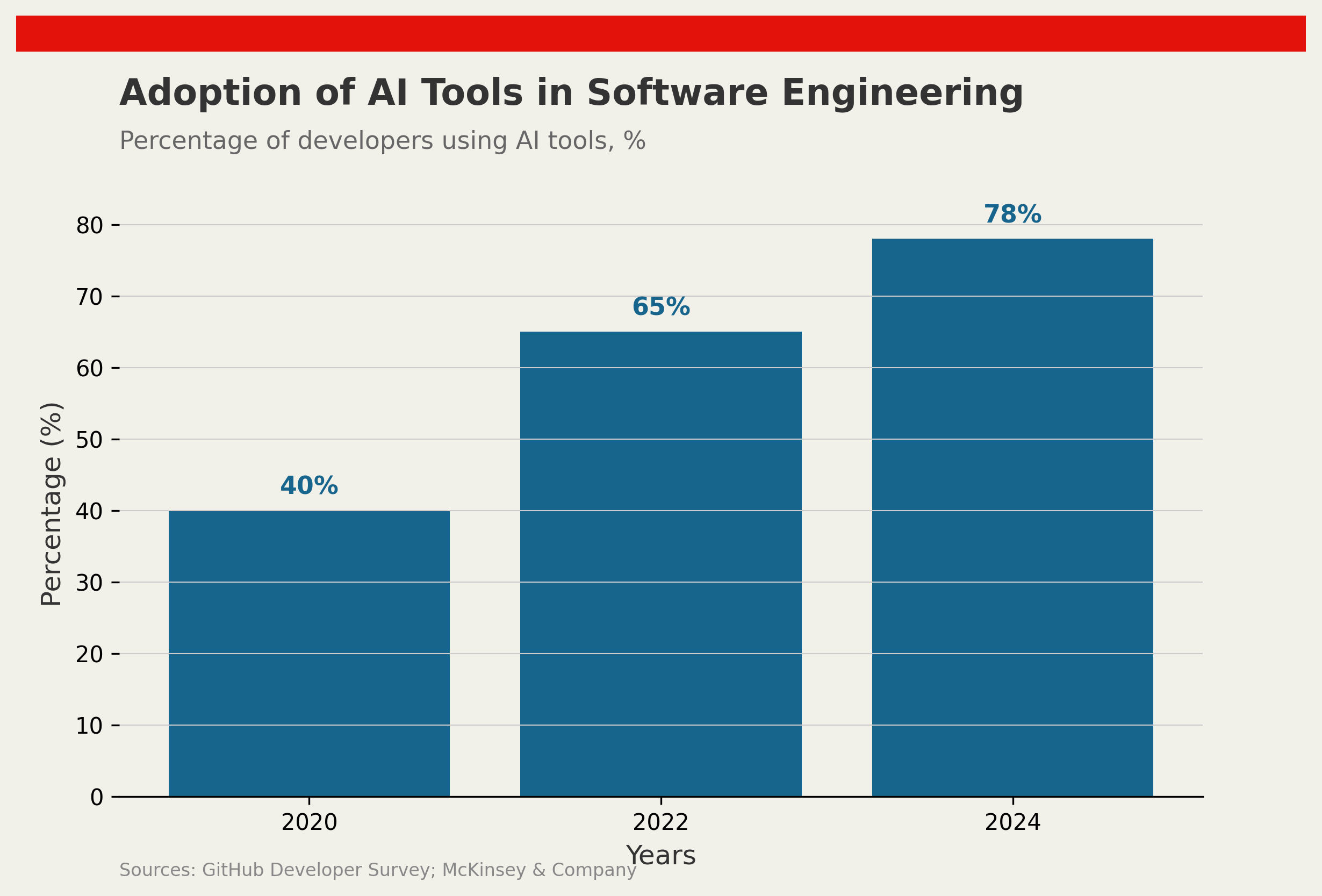
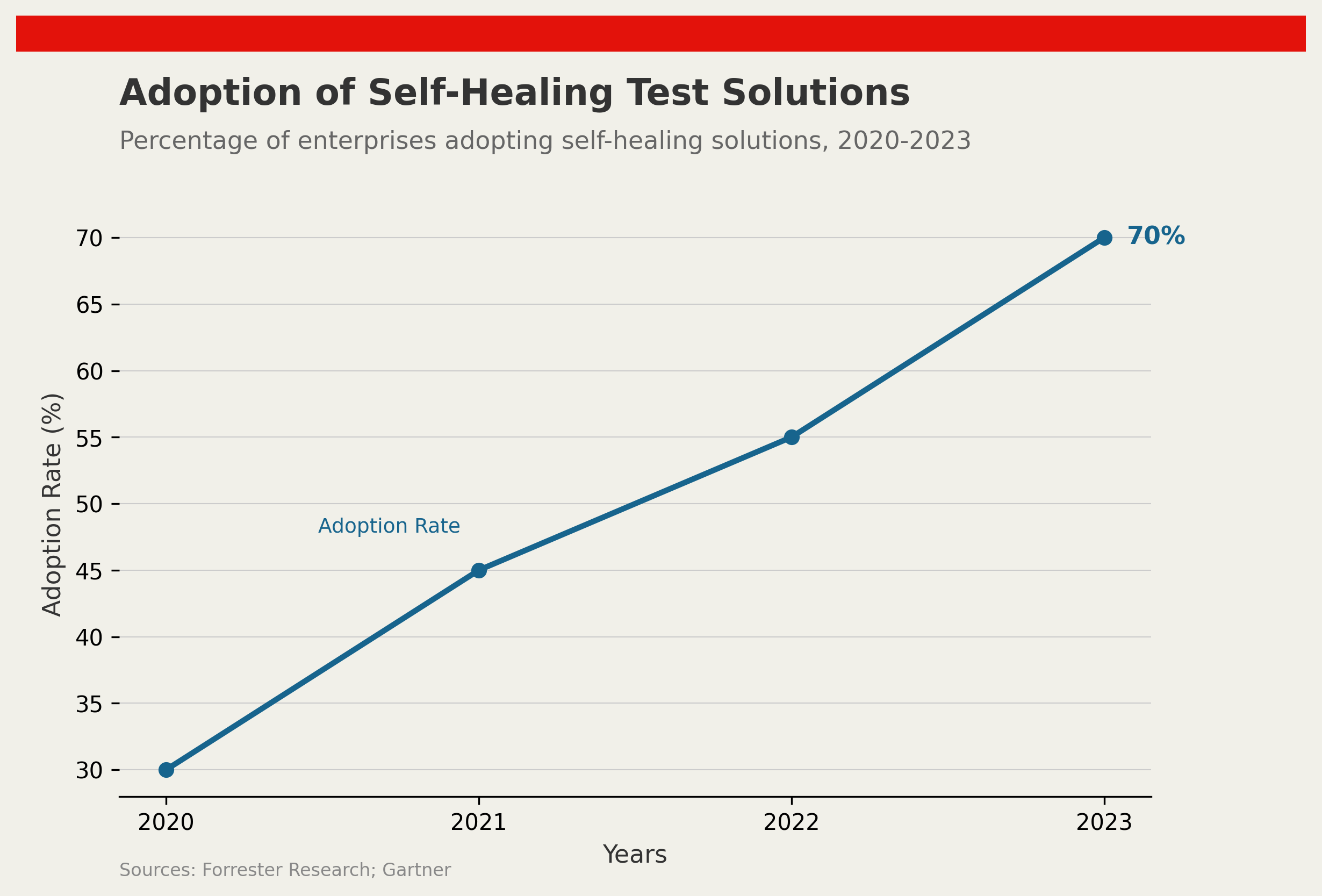
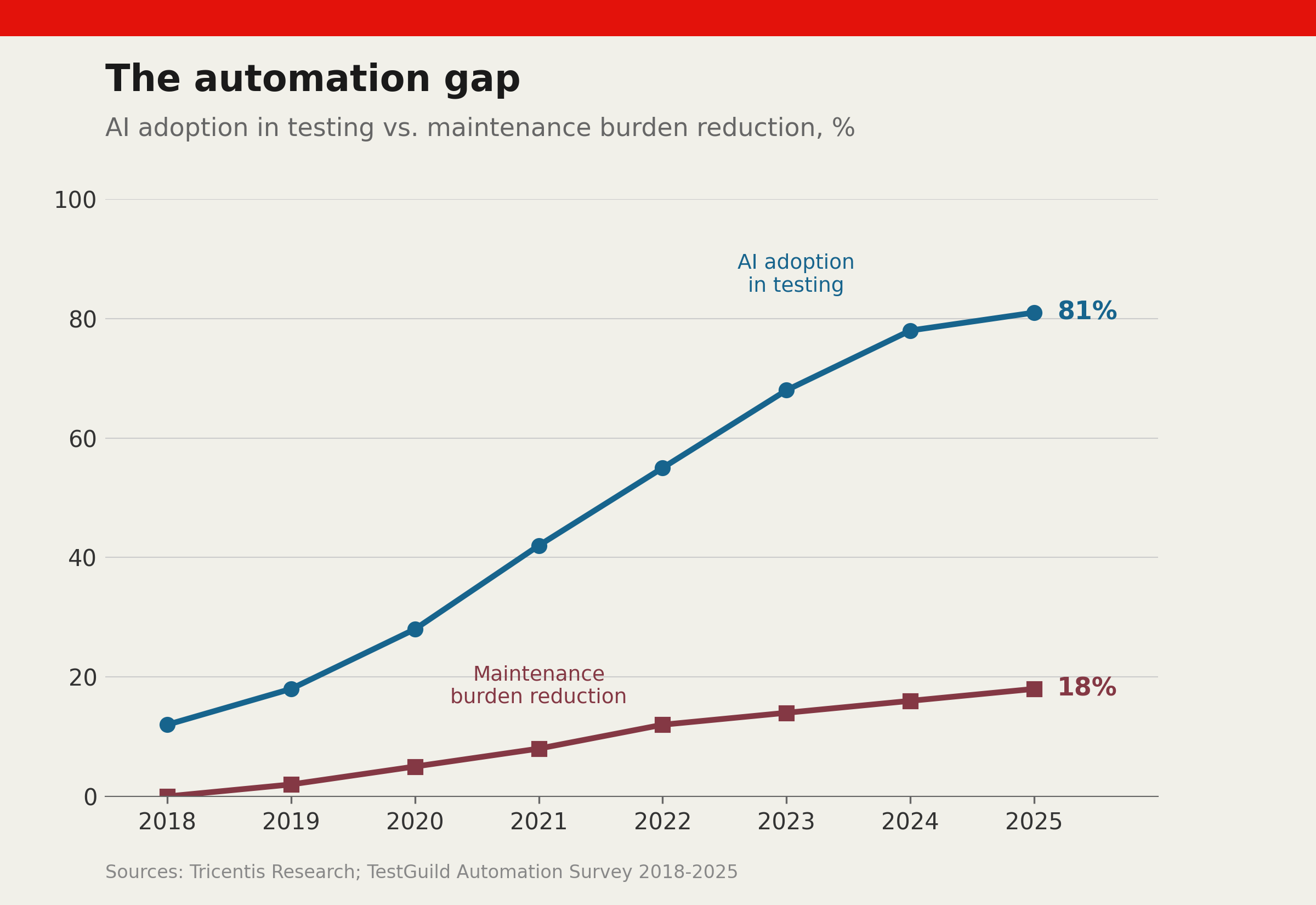
As the chart shows, the adoption of AI tools among developers increased sharply from 40% in 2020 to 78% in 2024. This rapid growth illustrates how developers have shifted their paradigms, driven by the allure of increased productivity and efficiency offered by AI technologies.
Economic Implications
The economic potential of AI in software engineering is vast. A report by PwC suggests that AI technology could contribute an additional $15.7 trillion to the global GDP by 2030, citing software development as a crucial sector for this growth. The infusion of AI into this domain is comparable to the advent of assembly lines during the Industrial Revolution, streamlining processes that were once laboriously manual.
Given the sector’s impact, companies are increasingly investing in AI capabilities to harness these benefits. However, while productivity gains are clear, the full economic yield remains dependent on broader adoption and integration into existing workflows. The future economic landscape is thus poised for change, as AI-driven efficiencies become systematically ingrained across industries.
Challenges and Contradictions
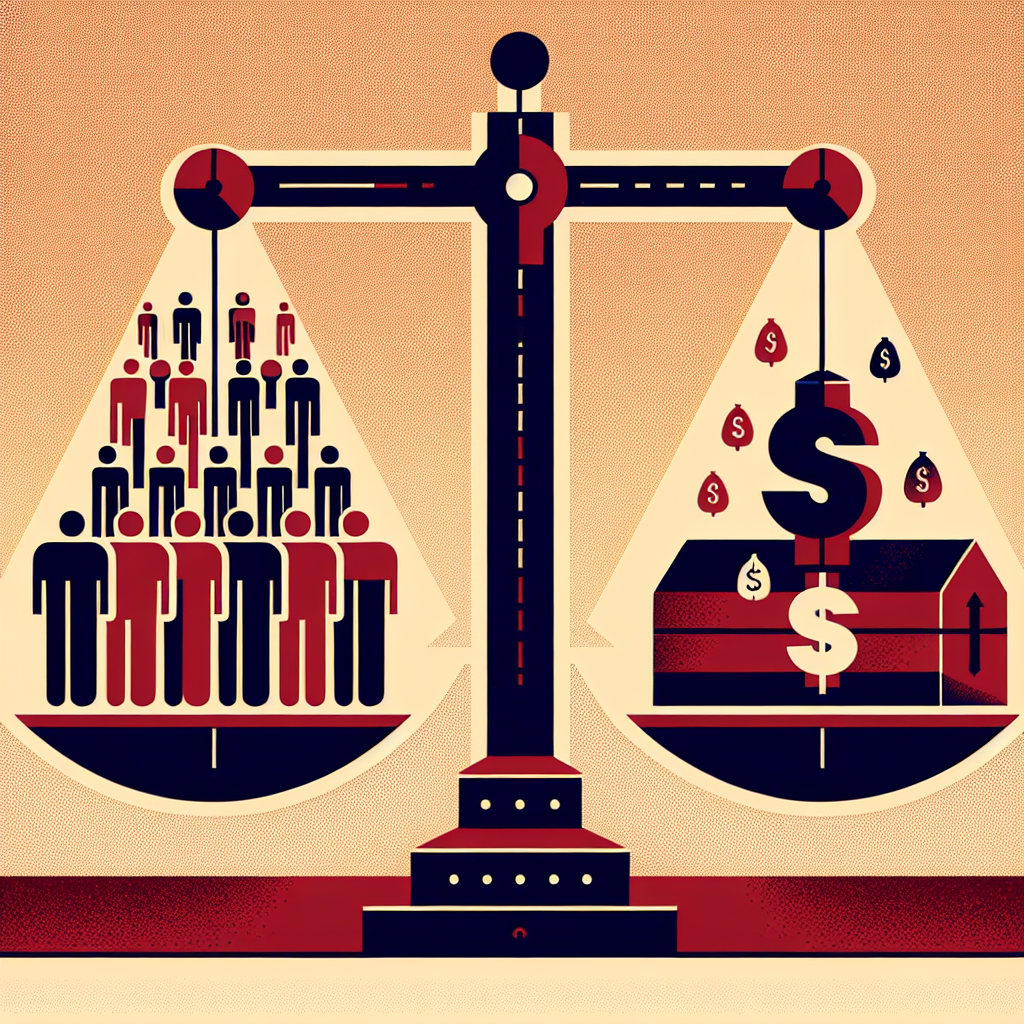
Despite the promising outlay, challenges abound. The reliance on AI tools poses questions about the evolving role of engineers. Critics argue that while AI tools reduce routine coding, they may undermine entry-level positions, shifting demand towards more experienced engineers who can manage and interpret AI outputs effectively. This paradox not only affects career trajectories but also influences educational curriculums that need to adapt to these emerging dynamics.
Furthermore, the potential downsides of heavy dependence on AI, such as data privacy issues and algorithmic biases, cannot be ignored. Organisations must implement robust governance frameworks to mitigate these risks while fostering innovation.
The Road Ahead
Looking forward, the trajectory of AI-assisted development points towards a more automated and efficient software engineering environment. However, realising the full potential of AI-driven efficiencies demands more than just advanced tools; it requires cultural shifts within companies, reimagined roles for engineers, and progressive education systems.
Industries that strategically align these elements stand to benefit profoundly from AI’s transformative power, redefining norms in software development. The firms that can marry these innovations with enhanced business strategies will likely dominate the competitive landscape.
AI-assisted development is not just automation of existing processes but a catalyst for change, pushing organisations to rethink their approach from foundational levels. While technological developments forge ahead, the true frontrunners will be those who adapt fastest without compromising on ethical standards and workforce development. Thus, this era of AI in software engineering reflects a formidable analogue to past industrial leaps, setting the stage for an explosive, multifaceted evolution in technology creation and deployment.
References
- McKinsey & Company, “The future of software development”, McKinsey & Company, 2024
- GitHub Developer Survey, GitHub, 2024
- PwC Report: AI Impact on Global Economy, PwC, 2023
- Market Research Future Report, “AI in Software Development Market”, Market Research Future, 2023