A test strategy is not a document that sits in Confluence gathering dust. It’s an operational blueprint that guides testing decisions across your delivery lifecycle. This post covers what separates effective test strategies from checkbox exercises.
What a Test Strategy Should Contain
A complete test strategy addresses:
Scope and Objectives: What are we testing and why? What quality attributes matter most—functionality, performance, security, usability?
Test Approach: Which testing types apply at each stage? How does testing integrate with your development workflow?
Environment Requirements: What infrastructure is needed? How will test data be managed?
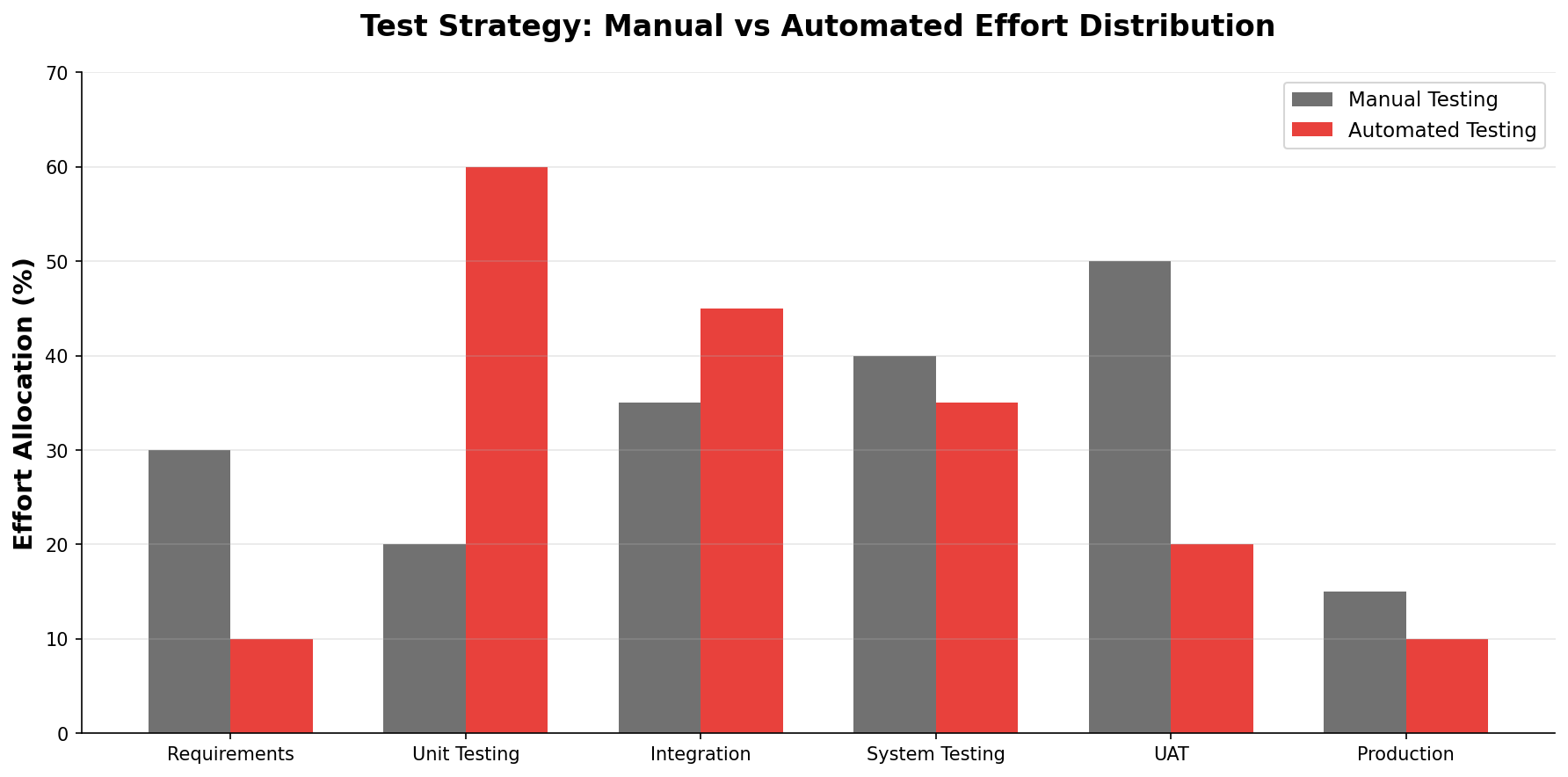
Automation Strategy: What should be automated? What tools will you use? Who maintains the automation?
Risk Assessment: What are the highest-risk areas? How will testing address them?
Exit Criteria: What conditions must be met to consider testing complete?
Start with Application Understanding
Before writing a single test case, understand what you’re testing. Map the architecture. Identify integration points. Document critical user journeys. This investment pays dividends: teams that understand their application write more targeted tests and find more meaningful defects.
Define Clear Objectives
“Find bugs” is not a test objective. Effective objectives are specific and measurable:
- Achieve 80% code coverage on business-critical modules
- Validate response times under 200ms for key API endpoints
- Verify security controls for PCI compliance
Clear objectives enable clear prioritization.
Balance Automation Investment
Not everything should be automated. Focus automation on high-value scenarios:
- Regression tests that run frequently
- API contracts that change rarely
- Performance baselines that need consistent measurement
Reserve manual testing for exploratory work and scenarios where human judgment adds value.
Integrate Testing into Delivery
Testing that happens at the end of a sprint is testing that happens too late. Effective test strategies embed quality activities throughout development:
- Unit tests written with code
- Integration tests triggered by CI
- Exploratory testing concurrent with feature development
Key Takeaway
A test strategy should be a living document that evolves with your product. Review it quarterly. Update it when architecture changes. Measure its effectiveness by tracking defect escape rates and testing efficiency.
The best strategy is one that teams actually follow.